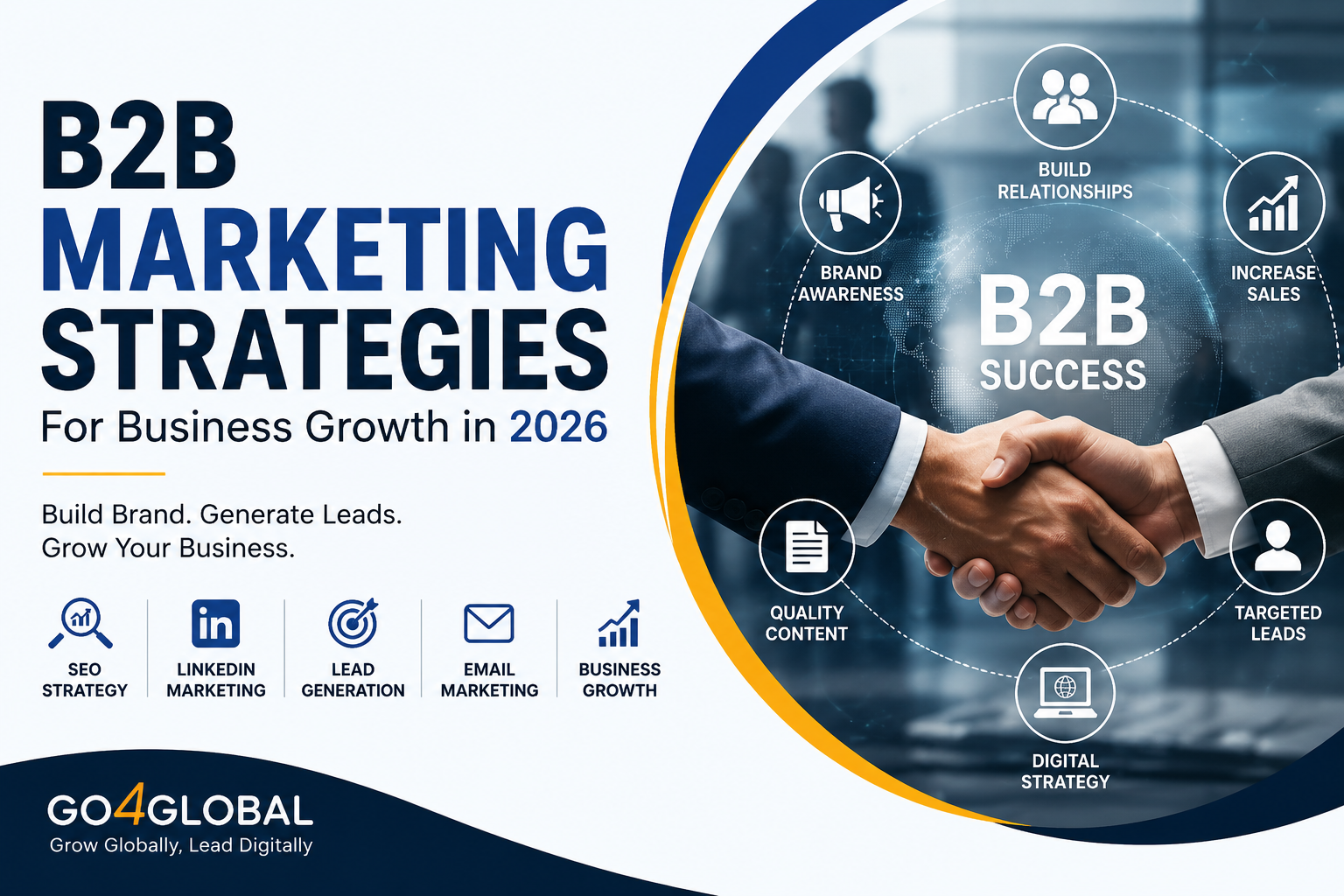



In today’s competitive business environment, B2B marketing has evolved far beyond traditional sales tactics. Unlike B2C marketing, where businesses directly target consumers, Business-to-Business (B2B) marketing focuses on building relationships, delivering value, and helping organizations make informed purchasing decisions.
At Go4Global, we understand that successful B2B marketing requires a strategic approach tailored to business buyers. Let’s explore the 10 key principles that make B2B marketing unique and effective.
What is B2B Marketing?
B2B (Business-to-Business) marketing refers to the process of promoting products or services from one business to another. The primary objective is to generate qualified leads, nurture relationships, and convert prospects into long-term clients.
Examples of B2B businesses include software companies, manufacturing firms, digital marketing agencies, IT service providers, and consulting organizations.
1. Relationship Building is the Foundation
Unlike B2C transactions, B2B purchases are rarely impulsive. Businesses prefer to work with companies they trust.
Building long-term relationships through consistent communication, transparency, and exceptional service is essential. Trust often becomes the deciding factor when businesses choose a vendor or partner.
Key Strategy:
- Maintain regular follow-ups.
- Offer personalized solutions.
- Provide continuous support even after the sale.
2. Longer Sales Cycles
B2B purchasing decisions typically involve extensive research, discussions, and approvals. The sales cycle may last weeks or even months.
Multiple touchpoints such as emails, meetings, presentations, and demonstrations are usually required before closing a deal.
Key Strategy:
- Implement lead nurturing campaigns.
- Use email automation.
- Share valuable content throughout the buyer journey.
3. Multiple Decision Makers are Involved
In B2B marketing, purchasing decisions often involve several stakeholders, including managers, department heads, finance teams, and senior executives.
Each stakeholder has different concerns and priorities.
Key Strategy:
Create marketing messages that address:
- Financial benefits.
- Operational efficiency.
- Technical capabilities.
- Return on investment (ROI).
4. Focus on Logic Over Emotion
While emotions still influence decisions, B2B buyers primarily rely on logic, facts, and measurable outcomes.
Businesses want evidence that your product or service can solve their problems effectively.
Key Strategy:
Highlight:
- Cost savings.
- Productivity improvements.
- ROI.
- Case studies and success stories.
5. Content Marketing Plays a Crucial Role
Educational content is one of the most powerful tools in B2B marketing.
Potential customers often research extensively before contacting a sales team.
Valuable Content Types:
- Blogs
- Whitepapers
- E-books
- Case Studies
- Webinars
- Industry Reports
- Videos
High-quality content establishes authority and builds trust with prospects.
6. Personalization Drives Better Results
Generic marketing messages rarely work in B2B environments.
Businesses expect personalized communication that addresses their specific industry challenges and business goals.
Key Strategy:
Segment audiences based on:
- Industry.
- Company size.
- Business challenges.
- Geographic location.
Personalized campaigns significantly improve engagement and conversion rates.
7. Lead Generation and Nurturing are Essential
Generating leads is only the first step. Nurturing those leads until they are ready to purchase is equally important.
Not every prospect is ready to buy immediately.
Effective Lead Generation Channels:
- Search Engine Optimization (SEO)
- LinkedIn Marketing
- Email Marketing
- Google Ads
- Content Marketing
- Webinars
- Referral Programs
8. Data and Analytics Guide Decision Making
Successful B2B marketers rely heavily on data to optimize campaigns and improve ROI.
Tracking key performance indicators helps businesses understand what works and where improvements are needed.
Important Metrics:
- Website Traffic
- Lead Conversion Rate
- Cost Per Lead (CPL)
- Customer Acquisition Cost (CAC)
- Return on Marketing Investment (ROMI)
- Email Open Rates
Data-driven decisions lead to better marketing performance.
9. Digital Presence Builds Credibility
A company’s website often serves as the first impression for potential clients.
Businesses frequently evaluate a company’s website, social media presence, testimonials, and online reputation before initiating contact.
Essential Digital Assets:
- Professional Website
- SEO Optimization
- Active LinkedIn Presence
- Client Testimonials
- Case Studies
- Portfolio
A strong digital presence increases credibility and trust.
10. Customer Retention is as Important as Acquisition
Acquiring a new customer is often more expensive than retaining an existing one.
Long-term customer relationships generate repeat business, referrals, and sustainable growth.
Key Strategy:
- Deliver excellent customer service.
- Conduct regular client reviews.
- Gather feedback.
- Continuously provide value.
Satisfied customers often become brand advocates.
How Go4Global Helps Businesses Grow Through B2B Marketing
At Go4Global Digital Solutions, we help businesses attract qualified leads, strengthen their digital presence, and accelerate growth through result-oriented B2B marketing strategies.
Our services include:
- Website Development
- Search Engine Optimization (SEO)
- Social Media Marketing
- LinkedIn Marketing
- Lead Generation Campaigns
- Google Ads Management
- Content Marketing
- Branding Solutions
Conclusion
B2B marketing is fundamentally different from B2C marketing. Success requires a combination of relationship building, strategic content, data-driven decision-making, and personalized communication.
By understanding these 10 key principles, businesses can create more effective marketing campaigns, generate quality leads, and build lasting client relationships.
Looking to grow your business with proven B2B marketing strategies? Connect with Go4Global Digital Solutions and take your business growth to the next level.